What Is a Medical Assistant? A Complete Career Guide for Minneapolis
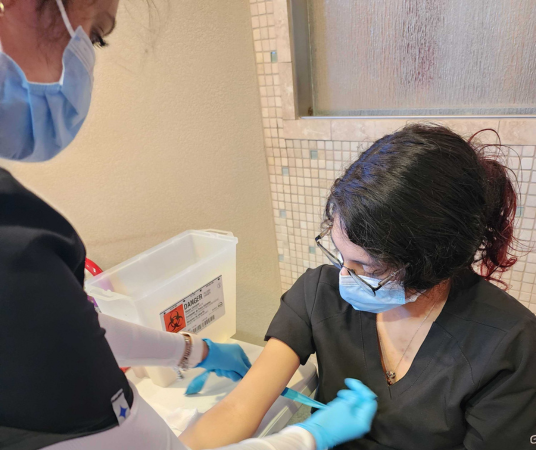
What is a medical assistant? In the simplest terms: the person who keeps a medical office moving. Medical assistants handle a combination of clinical and administrative work — taking vitals, drawing blood, updating records, scheduling patients, assisting during exams, and communicating with everyone from nervous first-time patients to experienced physicians.
It’s one of the fastest-growing entry-level healthcare careers in the country, and you don’t need a college degree to get started. Here’s what the role actually looks like, where MAs work, what they earn, and how to get into the field in Minneapolis.
What medical assistants do every day
The daily work splits into two categories — and most MAs handle both.
Clinical duties
These are the hands-on, patient-facing responsibilities:
- Vital signs — measuring and documenting blood pressure, heart rate, temperature, respiration, and oxygen saturation
- Phlebotomy — drawing blood for lab work, labeling specimens, following chain-of-custody protocols
- Injections — administering intramuscular, subcutaneous, and intradermal injections as directed
- EKG/ECG — placing leads, running 12-lead electrocardiograms, identifying technical artifacts
- Assisting during procedures — positioning patients, handing instruments, maintaining sterile fields
- Infection control — sterilizing instruments, disinfecting rooms, following OSHA bloodborne pathogen standards
Administrative duties
These keep the office organized and patients flowing:
- Scheduling and confirming appointments
- Checking patients in and collecting intake information
- Updating electronic health records (EHR)
- Verifying insurance coverage and processing referrals
- Handling phones, messages, and coordination between departments
- Maintaining HIPAA compliance in all communications
The combination of clinical and administrative skills is what makes medical assistants uniquely valuable — you’re trained for both sides of the office.
Where medical assistants work
MAs are employed across a wide range of healthcare settings:
- Physician offices — the most common setting, from family medicine to internal medicine
- Outpatient clinics and urgent care centers — fast-paced environments with high patient volume
- Specialty practices — dermatology, cardiology, orthopedics, pediatrics, OB/GYN, and more
- Hospitals and health systems — larger organizations with structured teams
- Community health centers — serving underserved populations with diverse needs
The variety means you can find a work environment that matches your interests, personality, and lifestyle.
What medical assistants earn
According to the Bureau of Labor Statistics:
- National median salary: approximately $42,000–$46,000/year
- Entry-level: approximately $33,000–$38,000/year
- Experienced / specialty settings: $50,000–$55,000+/year
Pay varies by location, type of practice, experience, and whether you hold a medical assistant certification like the CCMA.
What increases your earning potential:
- Certification — the CCMA or RMA demonstrates verified competency
- Specialty experience — working in oral surgery, cardiology, or dermatology often pays more
- Geographic location — higher cost-of-living areas tend to pay more
- Expanded skills — phlebotomy specialization, EKG expertise, or billing knowledge
Career growth opportunities
Medical assisting isn’t a dead-end job. With experience, MAs can:
- Advance into lead or supervisory positions
- Specialize in areas like phlebotomy, EKG technology, or medical billing and coding
- Move into office management or practice administration
- Use the experience as a foundation for nursing, health information management, or other advanced healthcare careers
How to become a medical assistant
The path is straightforward:
- Complete a training program — focused programs can be completed in months
- Build clinical skills through hands-on practice — phlebotomy, vitals, injections, EKGs
- Earn certification — the CCMA through the NHA is one of the most recognized credentials
- Apply for jobs — clinics and offices in Minneapolis are hiring
Get started at Minneapolis Medical Assistant School
- Explore the program: Program details
- Review tuition and payment options: Tuition
- Talk to our team: Contact
- Apply: How to apply
You're only a few months from the medical assistant career you deserve.